
Best Self-Tanner for Pale Skin: No Orange, No Streaks
If you are Type I or II on the Fitzpatrick scale, the right self-tanner gives you color without the orange cast or the tide-mark streaks fair skin shows so easily. Here is what to look for, how we judge it, and eight picks that read natural on very pale skin.
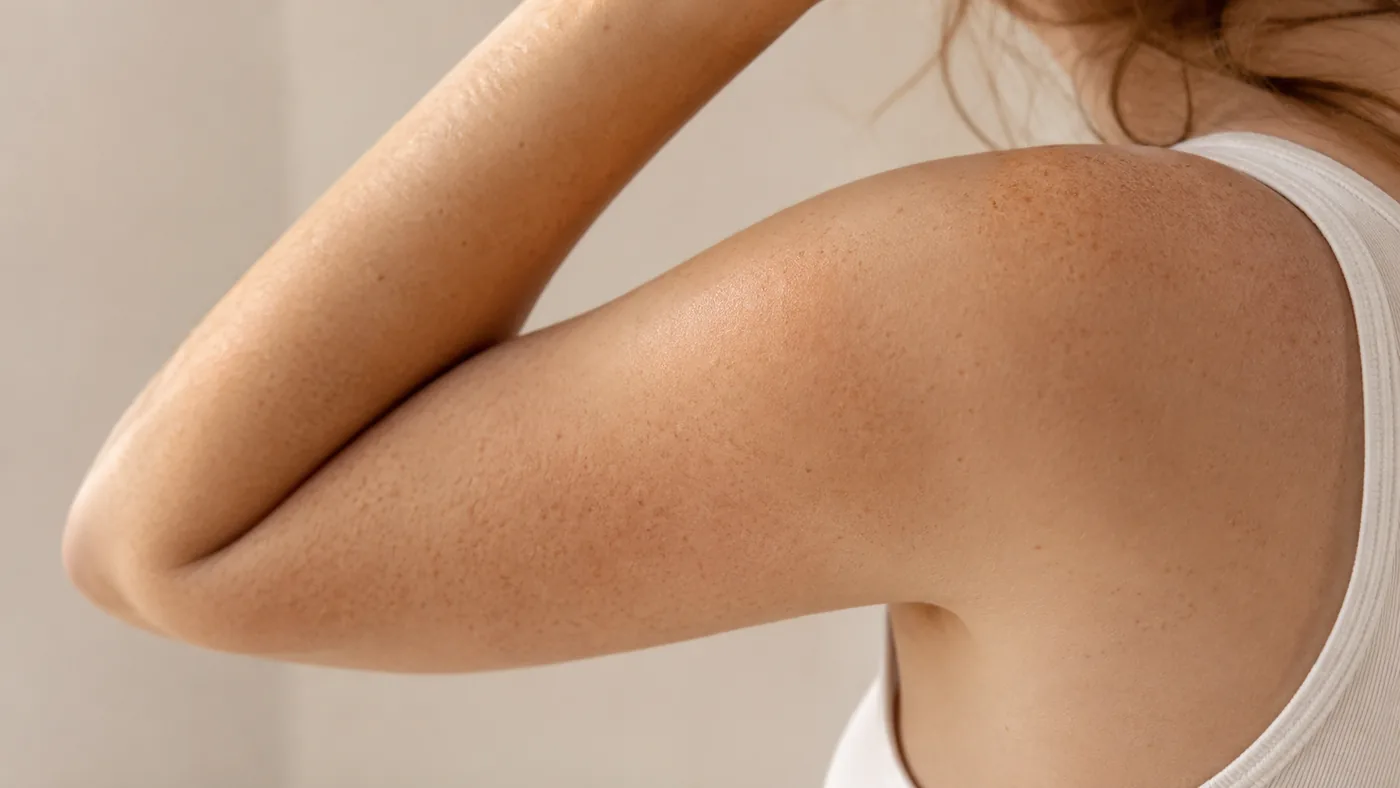
What pale skin needs from a self-tanner
I have spent a lot of years being the palest person in every room, and self-tanner is the one product where fair skin needs different rules. On medium or olive skin, a heavy bronzing formula blends into the natural color underneath. On Type I and Type II skin there is almost no natural pigment to blend with, so whatever color the bottle delivers is exactly what you wear, undiluted. That is why the same mousse that looks gorgeous on a friend can look like a fake bake on you.
The color in every self-tanner comes from DHA (dihydroxyacetone), a sugar that reacts with the dead cells on the surface of your skin and stains them a brown shade. Two things about DHA decide whether the result looks natural on fair skin.
- The amount of DHA. A higher DHA percentage means a deeper, faster tan. On pale skin that is exactly what you do not want at first. A low or buildable DHA load adds only a little color per layer, so you can stop the moment it looks right and a mistake is barely visible.
- The base tone of the formula. DHA naturally leans warm and slightly orange as it develops. Brands counter this with a base tint, and for fair skin you want a cool, violet, ash or green-based formula. Those undertones cancel the orange. A warm or red-leaning base, sold as giving a "deep golden glow", is usually what tips Type I and II skin into looking tangerine.
So the short version: for pale skin, favor gradual or buildable formulas with a low DHA load and a cool or natural base tone. Control matters more than depth. You can always go darker over a few days; you cannot easily take color back off in an hour. If you are not sure whether you are a true Type I or a Type II, that changes how cautious to be, so it is worth knowing. Here is how to find your type by hand, or you can take the Fitzpatrick test.
How we judge self-tanner for fair skin
Plenty of "best self-tanner" lists are really just the bestsellers reordered. We judge differently, against the problems fair skin actually runs into. Here is the bar a self-tanner has to clear to make a fair-skin list.
How we judge for Type I to II skin
Develop time and control. Can you stop early for a lighter tan, or does it commit you to a deep color? Buildable formulas and rinse-off express tanners score highest because fair skin needs an off-ramp.
Streaking on dry patches. Streaks show far more on pale skin because the contrast between tanned and bare areas is higher. Watch how a formula behaves over knees, elbows, ankles and the backs of hands, where dry skin grabs extra color.
Transfer. Does the guide color come off on sheets, white shirts and car seats before it sets? A formula that transfers everywhere is a hassle no matter how good the final tone is.
Fade pattern. The real test is day four to seven. A good self-tan fades evenly and softly. A bad one goes patchy and flakes off in blotches that, on fair skin, look worse than no tan at all.
The orange test. Most important for this audience. Look at the developed color in daylight: does it read as a believable golden tan, or does it carry the tell-tale orange or brassy cast that fair skin shows so readily?
Smell. The DHA reaction has a characteristic biscuity smell as it develops. Better formulas mask it well during wear; check reviews for any that stay strong after rinsing.
None of this is a lab measurement and none of it is medical advice. It is a consistent, fair-skin-first way of comparing formulas so the picks below are chosen on how they behave on Type I and II skin, not on which brand pays the most. Self-tanner sits on the surface of your skin and does not protect you from the sun, so it does not replace sunscreen. If you have a skin condition or react to a product, stop and see a dermatologist.
The four self-tanner types, ranked for fair skin
Self-tanners come in four broad formats, and they are not equally friendly to pale skin. Roughly in order of how forgiving they are, fairest skin first:
- Gradual tanning lotion. A regular body moisturizer with a small amount of DHA. You use it like lotion, daily or every other day, and color builds slowly. This is the safest entry point for Type I and II skin: low DHA, almost impossible to streak badly, and a mistake just fades. The trade-off is patience, since it takes several days to reach a noticeable tan.
- Mousse or foam with a guide color. A whipped formula, usually tinted, that you buff on with a mitt and rinse later. The guide color shows you exactly where you have applied, which makes even coverage easier. It develops faster and deeper than a gradual lotion. For fair skin, choose a light or medium shade with a cool base, not the "ultra dark" version.
- Tanning drops to mix in. Concentrated DHA drops you add to your own moisturizer or serum. The big advantage for pale skin is total control of strength: start with one or two drops and add more on later days. The downside is that there is no guide color, so even application takes a steadier hand.
- Express or rinse-off tanner. A fast-developing formula you leave on for a set time, from thirty minutes to a few hours, then rinse. The shorter you leave it, the lighter the result, which gives fair skin precise control over depth. Good for an event when you want color today, but it commits faster, so set a timer.
Buy two, not one
The setup that works best on fair skin is a pair, not a single bottle. Keep a gradual lotion for easy everyday color and topping up, and one mousse or express tanner for when you want a proper tan for an event. The gradual lotion smooths out the edges of the deeper tan as it fades, which is what stops fair skin going patchy on day five. It is also how you learn what your skin can take without risking a dark mistake all at once.
Eight self-tanners that won't look orange
These are the formats and shades I reach for on fair skin, described so you can grab whichever brand you already trust. Every link is a search, not a single product, so you can compare current options and prices yourself. Picks are grouped by what they do, not by rank, since the best one for you depends on whether you want easy maintenance or event-ready color.
How we choose: picks are selected editorially to fit fair, Type I to II skin, based on formula, how the color reads on pale skin, and reputation. No brand pays for placement. As an Amazon Associate this site earns from qualifying purchases, at no extra cost to you; links are searches so you can compare current options. Self-tanner does not protect against the sun, so keep wearing sunscreen.
- Low DHA load, so it is almost impossible to streak or overshoot on Type I to II skin
- Use it like a daily moisturizer and stop the day the color looks right
- The fair-to-medium shade fades softly, which keeps pale skin from going patchy
- Tinted guide color shows exactly where you have applied, for even coverage
- Its color-correcting base cancels the orange that DHA leans toward on fair skin
- Choose the Light shade, never the ultra-dark, on pale skin
- Total control of strength: mix one drop into moisturizer, add more on later days
- Mix into a moisturizer you already trust, so no new product reactions
- The Light shade is best for fair skin once you know how dark you want to go
- Rinse after one hour for a light tan, two for medium, three for deeper
- Rinsing early is the most precise way for fair skin to set the depth
- Ideal when you want color today for an event, with a timer
- Very light, fast-drying texture that develops to a soft, natural tone
- Less likely to streak than a heavy cream, which suits pale skin
- Its color-correcting formula neutralizes redness and orange on fair skin
- Formulated lighter and non-comedogenic so it suits facial skin
- Drops mix into your own serum, so you match color to a fair body tan
- Building drop by drop lets you add color without a harsh line
- A mitt is the most important streak-prevention tool, no matter the formula
- Stops the tanner staining your palms, the most visible giveaway
- Washable and reusable, and pairs with a back applicator for hard spots
- The fix for a too-dark or streaky result, which matters most on pale skin
- Lifts old tan so the next application goes on a clean, even base
- Cheap insurance that makes experimenting with depth low-risk
Notice that two of the eight picks are not tanners at all: a mitt and a remover. On fair skin those tools change the odds more than the bottle does. The mitt keeps color off your palms and even on your limbs, and the remover means a dark mistake is a twenty-minute fix rather than a week of hiding. If you only add two things to a gradual lotion, make them those.
How to apply it without streaks
The formula matters, but on pale skin the application is where tans are won or lost, because every uneven patch shows. The routine below is the one that keeps fair skin even.
Before you tan
- Exfoliate the day before, not the same day. Slough off dead skin so the tan grabs evenly, but do it the day ahead so any oils or residue have cleared. Pay attention to knees, elbows, ankles and the backs of hands.
- Shave or wax in advance. Do hair removal the day before too, so pores are closed and you avoid speckled dots where the tanner pools in follicles.
- Skip moisturizer everywhere except the dry spots. Moisturizer between you and the tan can cause patches. The exception is a thin layer on knees, elbows, ankles and knuckles right before you apply, which makes those thirsty areas take less color.
Applying it
- Always use a mitt. It is the difference between an even tan and stained orange palms, which is the single most common giveaway.
- Work in sections, in circular motions. One limb at a time, blending each section into the next so there is no hard edge. Less product, blended well, beats a thick layer.
- Go light on knees, elbows, ankles and feet. Use only the product left on the mitt for these, never a fresh pump, and blend outward.
- Do your hands and feet last and lightest. Sweep whatever is left on the mitt over the tops of hands and feet, then wash your palms and between your fingers.
While it develops
- Wear loose, dark clothing. Tight or pale clothes can lift the guide color before it sets. Avoid sweating, showering or swimming until the develop time is up.
- Rinse on time, then moisturize daily. Rinse off the guide color when the time is up, water only at first. Keeping skin moisturized afterward is what makes the tan fade evenly instead of flaking.
Fixing a self-tan that went wrong
Everyone gets a streak or a too-dark patch eventually, and on fair skin it is more visible, so here is how to put it right without starting over.
- Overall too dark. Soak in a warm bath and exfoliate gently all over, or use a tan-removing mitt. The color lifts a level each time and softens fast.
- A single dark streak. Rub the line with a little lemon juice or a sugar scrub, or buff with a damp washcloth. Targeting just the streak evens the contrast without stripping the rest.
- Patchy or uneven. A thin layer of gradual lotion over the whole area fills in the lighter gaps and blends the patches while the tan fades down.
- Orange overall. If the color itself reads orange rather than just dark, that is the formula's base tone, not your application. Remove it, and next time choose a cool, violet or ash-based product instead.
One more reminder, since it is easy to forget: a self-tan is only color on the surface. It gives no sun protection at all, so Type I and II skin still needs daily SPF underneath and over it. The tan will not stop you burning, which on the fairest skin is the thing that matters most.
Not sure if you are Type I or Type II?
The two fairest types take color differently: true Type I skin needs the lightest, most cautious approach, while Type II can carry a touch more depth. Knowing which you are takes the guesswork out of choosing a shade. Take the Fitzpatrick test → It is free, runs in your browser, and nothing is stored.
Want the deeper read on your type before you buy? Each fair type has its own full guide with a sun-care routine, not just self-tan: Type I, very fair skin and Type II, fair skin. And if you are choosing a base tone for makeup as well, our note on matching undertones in foundation uses the same cool-versus-warm logic.
Frequently asked questions
Why does self-tanner turn orange on pale skin?
Self-tanner color comes from DHA, a sugar that reacts with the top layer of skin to create a brown pigment. On very fair skin there is little of your own melanin to blend with, so a warm or red-leaning base tone in the formula shows up undiluted and reads as orange. Choosing a cool or green-based formula with a lower DHA percentage, and building color gradually, is what keeps fair skin looking natural instead of tinted.
What self-tanner is best for the palest skin, like Type I?
For the very fairest skin, a gradual tanning lotion or a light-to-medium mousse with a cool base is the safest start. Gradual lotions carry a low DHA load so each layer adds only a hint of color, which means a mistake is barely visible and easy to correct. Skip dark and ultra-dark formulas at first; you can always go deeper once you know how your skin takes the color.
How long should I leave self-tanner on pale skin?
Follow the product's stated develop time, but on fair skin err toward the shorter end. Many mousses suggest one to three hours for a light tan and longer for deep. Because fair skin shows color at a lower DHA exposure, the shortest recommended time often gives plenty. Express and rinse-off formulas let you control depth precisely by rinsing earlier, which is ideal when you are still learning your skin.
Is a gradual lotion or a mousse better for fair skin?
Gradual lotion is more forgiving and better for everyday maintenance, since it builds slowly and rarely streaks. A mousse with a guide color develops faster and reaches a deeper tan, and the tinted guide makes it easy to see coverage, but it is less forgiving of rushed application. Many people on fair skin keep both: a mousse for an event and a gradual lotion to top it up between.
How do I stop self-tanner from grabbing on my knees, elbows and ankles?
Dry, thicker skin on knees, elbows, ankles and knuckles soaks up more product and develops darker. Exfoliate those areas well the day before, then apply a thin layer of plain moisturizer to them just before tanning so they take less color. Use whatever is left on the mitt for hands and feet rather than fresh product, and blend outward so there is no hard line.
Can I fix a self-tan that came out too dark or streaky?
Yes. To lighten an overall tan, soak in a warm bath and exfoliate gently, or use a tan-removing mitt or product. For a single dark streak, rub the spot with a little lemon juice or an exfoliating scrub, or buff with a damp washcloth. For uneven patches, a light layer of gradual lotion over the whole area can even out the contrast while the color fades.
Sources
- FDA, sunscreen: how to help protect your skin from the sun
- American Academy of Dermatology, sunscreen FAQs
- Fitzpatrick TB, "The validity and practicality of sun-reactive skin types I through VI," Archives of Dermatology, 1988
This site is educational and is not medical advice; for any skin concern, see a board-certified dermatologist.