
The best sunscreen for fair skin that burns easily
Fair, light skin, Fitzpatrick Type I to II, needs more sun protection than any other type, and it needs it every single day. Here are the sunscreen types that give fair skin high broad-spectrum SPF without stinging, flushing, or leaving it greasy, plus what to look for if you are reactive or rosacea-prone.
What fair skin needs from sunscreen
If you have fair, light skin, Type I or Type II on the Fitzpatrick scale, you already know the drill: fifteen minutes of unprotected midday sun and you are pink. There is no negotiating with skin that burns this fast, and no building a "base tan" that protects you, because for fair skin a tan is just a milder burn. What your skin is telling you every summer is simple. It needs the most sun protection of any type, and it needs it worn every day.
Here is the honest version of why. Melanin is the pigment that gives skin its natural sun defense, and fair Type I to II skin has the least of it. Deep skin's melanin gives it built-in protection estimated at around SPF 13 at best; fair skin's is only a small fraction of that, which is why you burn in minutes rather than an hour. That same lack of melanin is why fair skin shows the earliest signs of sun damage: freckling, sunspots, broken capillaries, and the premature lines and loss of firmness that dermatologists call photoaging. Fair skin keeps the record of every sunny day it was not protected.
So the job of sunscreen on fair skin is not subtle. It is your first line of defense against burning, against skin cancer risk (which is highest for the fairest skin), and against aging faster than you have to. That means one thing above all: high, broad-spectrum SPF, worn daily, in a formula you will actually reach for. The last part matters more than people admit. The best sunscreen is the one that does not sting your eyes, flush your cheeks, or feel so greasy that you skip it. For a lot of fair-skinned people, that is where the real search begins.
Mineral vs chemical, and why it matters more for fair skin
Fair skin is more likely than any other type to be sensitive, reactive, or rosacea-prone, so the mineral-versus-chemical question is not academic here. It decides whether your sunscreen calms your skin or sets it off.
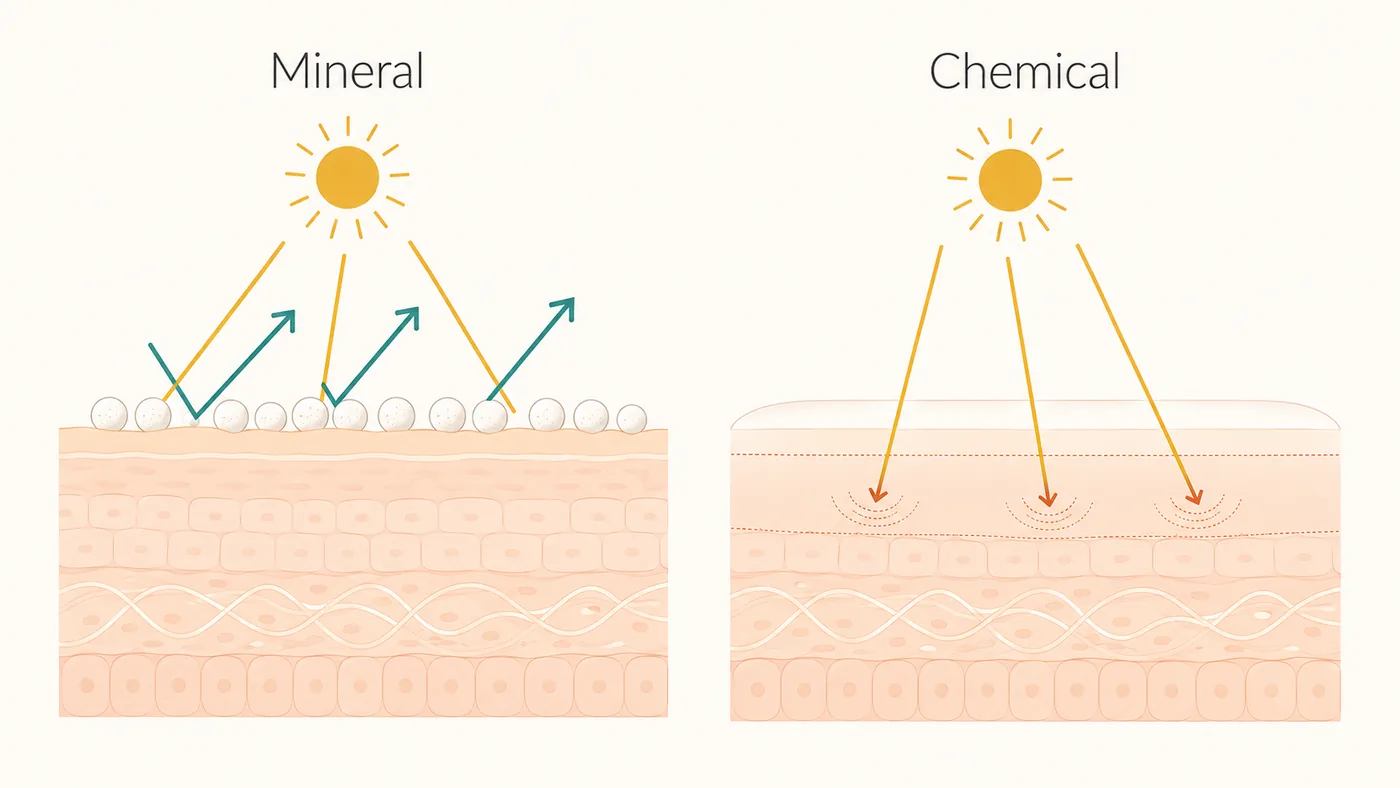
Mineral (physical) sunscreens use zinc oxide and titanium dioxide. They sit on top of the skin and reflect and scatter light rather than absorbing it. For fair, reactive skin this is usually the gentler choice: mineral filters rarely sting the eyes, are far less likely to trigger a rosacea flush, and zinc oxide is naturally soothing and mildly anti-inflammatory. The classic downside, a white cast, is much less of a problem on fair skin than on deep skin, and a modern tinted mineral formula erases it entirely.
Chemical sunscreens use filters that absorb UV and convert it to heat. They are lighter, more cosmetically elegant, and leave no cast at all, which is why so many people prefer them for everyday wear under makeup. The catch for fair skin is that some chemical filters can sting the eyes, feel warm, or provoke redness on reactive or rosacea-prone complexions. They are not off-limits, plenty of fair-skinned people wear them happily, but they are the category to patch-test first.
The practical rule: if your fair skin is calm and just wants an invisible daily SPF, a good chemical or hybrid formula is lovely. If your skin stings easily, flushes, or has any rosacea, start with a fragrance-free mineral sunscreen, and consider a tinted one to cancel redness while you are at it.
How we judge a sunscreen for fair complexions
Most "best sunscreen" lists treat all skin the same. Fair, easily-burned skin has specific needs, so every type below earns its place against the things that actually matter on Type I to II skin, judged the way you would judge it in real life.
Our checklist for fair skin
These are the four checks a sunscreen for fair, reactive skin has to pass, because a formula can pass one and fail the rest:
1. Protection first. Broad-spectrum, and SPF 50, not 30. Fair skin has the smallest margin for error, so start at the highest practical protection rather than the baseline.
2. The sting test. Does it sting the eyes or provoke a flush at a full protective dose? Fair skin is disproportionately sensitive, so a formula that stings is a formula you will not reapply.
3. Wearability. Does it sit well under makeup, avoid a greasy sheen, and feel light enough to wear every single day? The daily one is the one that counts.
4. Redness handling. A bonus, but a big one for fair skin: does a tinted version calm visible redness and even out a flushed or blotchy tone? This counts double for anyone rosacea-prone.
Recommendations are by product type and what to look for, so you can choose whichever brand you trust, not whichever pays the most.
Product types that actually work on fair skin
Rather than crown one "winner," it helps to know the categories, because the right one depends on your skin and your day. Here are the types that consistently serve Type I to II skin, with the job each does best and what to look for.
1. High-SPF mineral sunscreen (the gentle everyday default)
The job: broad-spectrum SPF 50 from zinc oxide and titanium dioxide, the calmest option for reactive, sensitive, and rosacea-prone fair skin. It sits on the surface, soothes rather than stings, and gives you the highest protection with the lowest chance of a reaction.
What to look for: "100% mineral" or "zinc oxide" high on the ingredient list, SPF 50, fragrance-free, and a modern texture that blends without a heavy chalk finish. On fair skin any residual paleness reads as brightness, not gray.
Budget alternative: a drugstore fragrance-free mineral SPF 50. Less silky than the boutique versions, but the zinc protection and gentleness are the same.
2. Sensitive-skin and rosacea SPF (fragrance-free, redness-safe)
The job: maximum gentleness for skin that stings, flushes, or has rosacea. This is a mineral or ultra-mild formula built to avoid the alcohol, fragrance, and harsh chemical filters that set reactive fair skin off, so daily sunscreen stops being a gamble.
What to look for: "fragrance-free," "for sensitive skin" or "for rosacea," zinc oxide, and calming extras like niacinamide. Simple ingredient lists win here.
Budget alternative: a fragrance-free mineral SPF from a dermatologist-favorite drugstore line. These are famously gentle and inexpensive.
3. Tinted sunscreen (to cancel redness and even fair tone)
The job: a mineral SPF with iron oxides that add a sheer, corrective tint. On fair skin the tint evens out a flushed, blotchy, or ruddy complexion, cancels rosacea redness, and blocks visible light, which is a real trigger for redness and melasma. It is sun protection and a light "no-makeup" base in one.
What to look for: "tinted" plus "iron oxides," and a shade or two aimed at fair-to-light skin so it actually matches rather than turning you sallow. A green-corrective or neutral tint is ideal for redness.
Budget alternative: a tinted mineral drugstore SPF in the lightest shade. Even one well-blended fair shade beats an untinted formula for calming redness.
4. Invisible chemical or hybrid SPF (for calm fair skin under makeup)
The job: a lightweight daily sunscreen that dries down completely clear with no cast, ideal for fair skin that is not reactive and wants an elegant base under makeup. Chemical and hybrid filters absorb into a transparent layer, so there is nothing to see and nothing to blend.
What to look for: a thin lotion, fluid, or gel; SPF 50; and, if your skin is at all sensitive, a patch test before you commit. Korean and Japanese formulas often lead here for their sheer, weightless feel.
Budget alternative: a drugstore "clear" or "dry-touch" lotion in SPF 50. Less refined, but invisible and light.
5. Sport and water-resistant SPF (for the burn-risk days)
The job: high, water-resistant SPF 50 for the beach, the pool, hiking, or any long day outdoors, exactly the situations where fair skin burns fastest. This is the one to over-apply and reapply religiously.
What to look for: "water resistant (80 minutes)," SPF 50, broad-spectrum, and a formula that survives sweat. A mineral sport version suits reactive skin; a clear chemical one is lighter for active days.
Budget alternative: any broad-spectrum, 80-minute water-resistant SPF 50 from a mainstream sun-care brand. Cheap is fine as long as you apply enough and reapply.
6. Body SPF and lip protection (the spots fair skin burns first)
The job: generous body coverage plus the two spots fair skin scorches and people forget: the lips, the tops of the ears, the part line, and the back of the neck. A body lotion or clear spray for the large areas, and an SPF lip balm for the mouth.
What to look for: a broad-spectrum SPF 30 to 50 body formula you will use enough of, and a broad-spectrum SPF lip balm to reapply through the day.
Budget alternative: a large-format drugstore body SPF and a basic SPF 30 lip balm. Buy the big bottle so you never ration it.
If you can only buy two
Get a high-SPF mineral or sensitive-skin daily SPF 50 for your face, the one you will wear every morning, and a water-resistant sport SPF 50 for the long-sun days when fair skin actually burns. Those two cover nearly every situation. Add a tinted mineral later if you want to calm redness, or a clear chemical SPF if your skin is calm and you want it invisible under makeup. Two products, worn consistently, beat a shelf you never touch.
Ingredients and finishes to look for, and to avoid
You do not need a chemistry degree, but a few label cues sort the fair-skin winners from the irritants fast.
Look for:
- "Broad-spectrum" and SPF 50. Non-negotiable for fair skin. Broad-spectrum covers both UVB (burning) and UVA (aging, pigment, wrinkles). Start at SPF 50, not 30, to build in a margin for under-application.
- Zinc oxide, if your skin is reactive. The gentlest, most soothing filter, and the safest bet for sensitive or rosacea-prone fair skin.
- Iron oxides, in a tinted formula. They cancel redness, even out a flushed fair tone, and add visible-light protection, a triple win for rosacea-prone skin.
- "Fragrance-free" and short ingredient lists. Fewer things to react to. Fragrance is one of the most common triggers for sensitive fair skin.
Be cautious with:
- Added fragrance and essential oils. A leading cause of stinging, redness, and breakouts on reactive fair skin. Skip them if you flush easily.
- High-alcohol "dry-touch" chemical formulas. They feel light but can sting and dry out sensitive or rosacea-prone skin. Patch-test first.
- Anything below SPF 30. For skin that burns this fast, a low SPF is not real protection. SPF 50 should be your daily floor.
- Chemical filters if you have active rosacea. Not a hard rule, but reactive, flush-prone skin usually does better on a fragrance-free mineral formula. When in doubt, mineral.
One note on melasma: it is often hormone-driven, and anyone pregnant or nursing should check with their doctor before starting new active ingredients.
How to apply sunscreen on fair skin (and how much)
The best sunscreen in the world fails if you wear too little of it, and under-application is nearly universal. SPF is measured at a thick lab dose most people never approach, so a thin everyday smear can quietly cut your real protection in half, which on fair skin is the difference between covered and burned.
How much: for the face and neck, aim for roughly a quarter-teaspoon. The easy way to picture it is two finger-lengths of product squeezed along two fingers. That feels like a lot at first; it is the right amount. For the body, a shot-glass worth covers an adult in a swimsuit.
When: apply as the last step of your morning skincare, before makeup, and give it a couple of minutes to set. And do it every day, not just sunny ones: up to 80 percent of UV passes through cloud, and the UVA that drives aging comes through windows too.
Reapplying: every two hours of real sun exposure, and after swimming or heavy sweating. For fair skin on a long outdoor day, set a phone reminder, because this is exactly when a missed reapplication turns into a burn. For an ordinary indoor day with brief outdoor stretches, one good morning application is genuinely enough.
Do not forget the edges: the tops of the ears, the nose, the lips, the hairline and part line, and the back and sides of the neck. These are the first places fair skin burns and the easiest to miss.
The picks
Below are representative products for each type above. We link to Amazon searches, not single listings, so you land on current options and pricing rather than a stale page, and so you can pick the brand you already trust within each category.
How we choose: picks are selected editorially to fit fair, Type I to II skin, based on formula, finish and gentleness on fair skin, and reputation. No brand pays for placement. As an Amazon Associate this site earns from qualifying purchases, at no extra cost to you; links open a search so you see current options.
Not sure you are Type I or II?
This guide is written for fair, Type I to II skin, but if your skin holds a tan more than it burns you may land at Type III and want a slightly different routine. The fastest way to know is to check where you fall on the scale. Not sure of your type? Take the Fitzpatrick test → or read how to find your skin type by hand.
Questions, answered
What SPF should fair skin use?
Fair skin, Fitzpatrick Type I to II, should use a broad-spectrum SPF of at least 30 every day, and SPF 50 is the better daily pick. Fair skin has the least natural melanin defense and burns fastest, so it needs the highest practical protection. SPF 50 gives you a real margin for the under-application almost everyone is guilty of, which quietly cuts the true SPF in half.
Is mineral or chemical sunscreen better for fair, reactive skin?
For fair skin that is reactive, rosacea-prone, or easily stung, mineral sunscreen with zinc oxide and titanium dioxide is usually the gentler choice, because it sits on top of the skin and is far less likely to sting the eyes or trigger a flush. Zinc oxide is also naturally calming. Chemical sunscreens are lighter and leave no white cast, but they can sting sensitive or rosacea-prone skin, so patch-test first.
Does mineral sunscreen leave a white cast on fair skin?
The white cast that makes mineral sunscreen unpopular on deeper skin is far less of a problem on fair skin, and can even be a small benefit, since a light corrective tone reads as a natural brightness rather than gray. A tinted mineral formula with iron oxides erases any residual cast entirely and adds visible-light protection, which helps with rosacea redness and melasma.
What sunscreen is best for rosacea and redness-prone skin?
For rosacea and redness-prone fair skin, choose a fragrance-free mineral sunscreen with zinc oxide, ideally a tinted one with a green or neutral corrective tint that cancels redness. Avoid alcohol-heavy, fragranced, and chemical-filter formulas that can sting or trigger a flush. A gentle tinted mineral SPF both protects and visibly calms redness in one step.
Do I need sunscreen on cloudy days if I have fair skin?
Yes. Up to 80 percent of UV rays pass through cloud, and UVA, the aging, wrinkle-driving side of the spectrum, penetrates glass and windows too. For fair Type I to II skin, which shows sun damage and premature aging faster than any other type, daily sunscreen is worth wearing every day of the year, indoors near windows included, not just on obviously sunny days.
How much sunscreen should fair skin apply?
Use roughly a quarter-teaspoon for the face and neck, about two finger-lengths of product squeezed along two fingers, and a shot-glass worth for the body. Most people apply a quarter to a half of the tested amount, which cuts the real SPF sharply. Reapply every two hours of sun exposure, and after swimming or sweating. On fair skin the cost of skimping is a burn, so err generous.
Related guides
Sources
- American Academy of Dermatology, sunscreen FAQs
- FDA, sunscreen: how to help protect your skin from the sun
- Fitzpatrick TB, "The validity and practicality of sun-reactive skin types I through VI," Archives of Dermatology, 1988
This site is educational and is not medical advice; for any skin concern, see a board-certified dermatologist.