
Best sunscreen for brown skin: invisible SPF picks
Brown skin does not need sunscreen to stop a burn, it needs sunscreen that disappears and keeps tone even. Here is how I sort the no-white-cast SPFs that actually work on Type V skin, plus the dark-spot companion that makes them worth wearing.
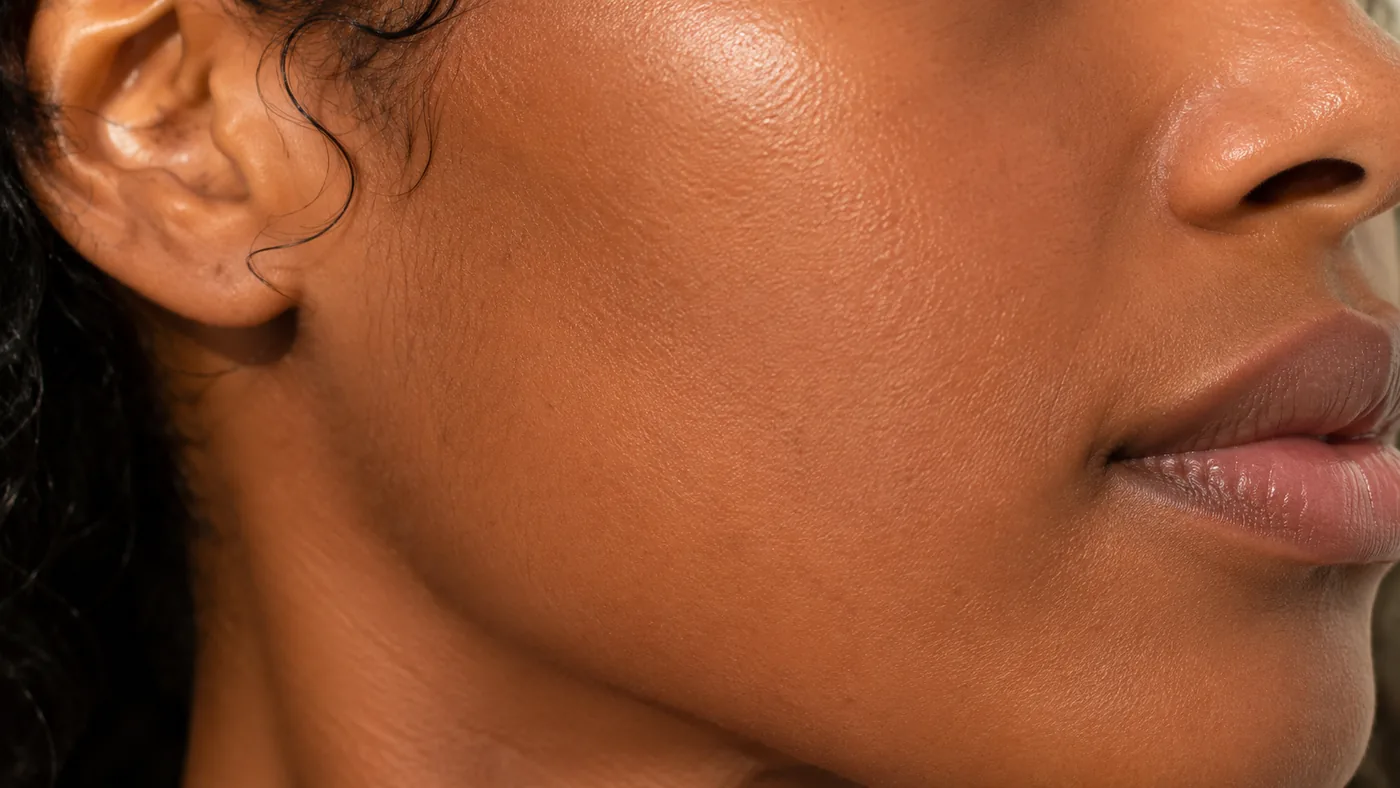
What brown, Type V skin actually needs
If you are reading this, you have probably already been burned, not by the sun, but by a sunscreen. You rubbed it in, looked in the mirror, and saw a gray film sitting on top of your skin like ash. That is the single most common complaint on brown skin, and it is the reason so many people with Type V skin quietly stopped wearing SPF at all.
So let me be clear about the goal. Brown skin, Fitzpatrick Type V, has plenty of melanin. It rarely burns and it deepens readily in the sun. The risk is not a lobster-red afternoon, it is hyperpigmentation: dark spots, melasma, and the stubborn marks that linger for months after a single blemish heals. Sun exposure is the biggest thing that makes those marks darker and slower to fade. So the job of sunscreen on brown skin is not to prevent a burn. It is to keep your tone even and protect the work of anything you are doing to fade spots.
That changes what a good sunscreen looks like for you. It has to do three things at once:
- Disappear completely. No gray cast, no chalk, no purple undertone. If it is visible, you will not wear it daily, and daily is the only thing that works.
- Cover UVA strongly. UVA is the wavelength most tied to pigment and aging, so broad-spectrum with a high UVA rating matters more than chasing a giant SPF number.
- Play nicely with brightening. Sunscreen prevents new spots; it does not erase old ones. The fade comes from a treatment underneath it, which is why I treat a vitamin-C serum as part of the same purchase.
How I sorted these picks
How I judge a sunscreen for brown skin
I am not a lab, and I do not pretend to be. What I do is read formulas the way someone with Type V skin has to: filters first, finish second, everything else third. Here is the test each pick has to pass before it earns a spot below.
The cast test. Does the filter system avoid a gray film on deep skin? Sheer chemical filters pass by default because they are clear. Mineral formulas only pass if they are tinted with iron oxides or micronized finely enough to vanish. Thick untinted zinc gets cut, every time.
The protection test. Broad-spectrum, SPF 30 or higher, with real UVA coverage (a high PA rating or a stated UVA factor), because UVA is what drives pigment.
The wear test. Would someone genuinely reach for this every morning? A sunscreen that feels heavy, smells strong, or pills under makeup gets skipped, and a skipped sunscreen protects nothing.
I recommend product types, not single bottles, and I link to a search so you can pick the brand you already trust. Picks are chosen on fit for Type V skin, not on what pays the most.
The three things to buy, in order
There are really only three categories you need to understand. Get these straight and the shelf stops being intimidating.
1. Invisible chemical SPF (the everyday default)
Chemical sunscreens use filters that are clear from the moment they go on, because they absorb UV rather than reflecting it. On brown skin that is a gift: no white pigment means no cast to fight. The best modern ones, often Korean or Japanese fluids, feel like a light moisturizer and sink in fast. For most people with Type V skin, this is the one you wear daily under everything.
2. Tinted mineral SPF (the dark-spot specialist)
Tinted mineral sunscreens add iron-oxide pigment to a zinc or titanium base. The pigment does two jobs: it cancels the white cast so the formula matches deeper tone, and it blocks visible light, which research links to pigment and melasma on its own, separate from UV. If your main concern is melasma or marks that refuse to fade, this is the more protective choice. The catch is shade range, so this is the one I tell people to buy in person or buy returnable.
3. A vitamin-C serum (the companion that does the fading)
This is the one people skip, and it is the one that actually moves dark spots. Vitamin C slows the enzyme that overproduces melanin, so over four to twelve weeks it fades existing marks and evens tone. Worn in the morning under your sunscreen, it also neutralizes some of the free radicals UV creates, which is exactly the trigger that re-darkens spots. Sunscreen protects the progress; the serum makes the progress. They are a pair.
If you only buy two things first
Start with the invisible chemical SPF and the vitamin-C serum. That covers daily prevention plus active fading, which is most of the result for most people. Add a tinted mineral SPF later only if you are dealing with melasma or stubborn pigmentation that the first two are not shifting. You do not need all three on day one.
How we choose: picks are selected editorially to fit brown, Type V skin, based on formula, finish on deeper skin tones, and reputation. No brand pays for placement. As an Amazon Associate this site earns from qualifying purchases through the affiliate links below, at no extra cost to you.
- Clear filters mean zero cast on brown skin
- Light, fast-absorbing finish you will wear daily
- Broad-spectrum with strong UVA coverage
- Iron-oxide tint cancels the gray cast on deep skin
- Blocks visible light, the hidden melasma trigger
- Doubles as a sheer, even-toning base
- Slows melanin overproduction to fade dark spots
- Adds antioxidant defense under your SPF
- Visible evening of tone over 4 to 12 weeks
- Gentler brightener if vitamin C irritates you
- Helps even tone and calm post-blemish marks
- Layers easily under any of the sunscreens above
- Larger format for arms, chest and hands
- Non-greasy, no cast, made for melanin-rich skin
- Protects the spots that show on brown skin
- Glides over makeup without smearing it
- Clear, no-cast formula that vanishes on deep tone
- Easy to keep in a bag for long days out
- No fragrance, for reactive or breakout-prone skin
- Less likely to trigger the marks it is meant to prevent
- Sheer finish that still vanishes on deep tone
Not sure brown, Type V skin is actually your match? Take the Fitzpatrick test → It takes under a minute and pins your phototype (the clinical term for skin type) from I to VI, so you are buying for the right skin.
Ingredients to look for and avoid
You do not need to memorize a chemistry book. A handful of words on the label tell you almost everything.
Look for
- Broad-spectrum with SPF 30 or higher, and a high PA rating (PA+++ or PA++++) or a stated UVA factor. UVA is the pigment driver.
- Iron oxides in any tinted formula. This is the ingredient that both cancels the cast and blocks visible light.
- Modern chemical filters (newer-generation UV filters) if you want clear protection with no mineral cast at all.
- Niacinamide, vitamin C or azelaic acid if your sunscreen or your morning serum can fold in a brightener, that is bonus dark-spot work.
Be cautious with
- Thick untinted mineral SPF (high percentages of zinc oxide or titanium dioxide with no tint). This is the number-one cause of gray cast on brown skin.
- Heavy fragrance if you are breakout-prone, since the marks left behind are exactly what you are trying to avoid.
- Drying alcohol high in the list, which can leave brown skin tight and flaky, making everything sit unevenly.
One note on brighteners: melasma is often hormone-driven, and anyone pregnant or nursing should check with their doctor before starting new active ingredients like vitamin C, niacinamide, or azelaic acid.
How to use it so it works
The best sunscreen for brown skin only works if you apply it the way it was tested. Three habits do most of the heavy lifting.
- Use enough. Roughly two finger-lengths for the face and neck. Most people under-apply by half, which quietly turns an SPF 50 into something far weaker.
- Layer in order. Vitamin-C serum first, let it settle, then sunscreen as the last skincare step, before makeup. That sequence gives you fade plus protection in the same two minutes.
- Reapply on long days. Every couple of hours when you are outside for a stretch. A mist or stick over makeup makes this realistic instead of aspirational.
Do this daily, rain or shine, and the payoff on brown skin is not a tan you avoided, it is tone that stays even and dark spots that finally start to fade instead of deepen.
Want the full routine for your phototype, not just the sunscreen? Read the Type V (brown skin) guide, or compare it against sunscreen for dark, Type VI skin if your tone sits deeper than brown.
Questions, answered
What is the best type of sunscreen for brown skin?
For brown, Type V skin the best sunscreen is one that disappears completely and helps keep tone even. That usually means a sheer chemical SPF, which is clear from the start, or a tinted mineral SPF with iron oxides, where the pigment cancels any cast and adds visible-light protection. Both work; the right one is whichever you will actually wear every day. Avoid thick untinted mineral formulas, which are the main cause of a gray cast on deeper skin.
Why does sunscreen leave a white or gray cast on brown skin?
The cast comes from the mineral filters zinc oxide and titanium dioxide, which are naturally white and sit on top of the skin reflecting light. On fair skin you barely notice it; on brown skin it reads as a gray film. Two fixes work: a chemical sunscreen, which uses clear filters that absorb UV instead of reflecting it, or a tinted mineral sunscreen, where iron-oxide pigment neutralizes the white and blends into deeper tone.
Does brown skin really need sunscreen?
Yes. Brown, Type V skin has more melanin and burns far less easily than fair skin, but it is very prone to hyperpigmentation: dark spots, melasma and the marks that linger after a blemish heals. Sun exposure is the biggest thing that makes those marks darker and slower to fade. Daily broad-spectrum SPF is the most effective step for keeping brown skin even, not for preventing a burn.
Is a chemical or mineral sunscreen better for brown skin?
Neither is universally better; they solve the cast problem differently. Chemical sunscreens are usually the easiest invisible option on brown skin because their filters are clear. Tinted mineral sunscreens are the better choice if your main concern is melasma or stubborn dark spots, because the iron oxides also block visible light, which can trigger pigment on its own. Many people on deeper skin end up with a tinted formula for the face and a sheer chemical one for the body.
Will sunscreen fade my dark spots?
Sunscreen prevents dark spots from getting worse and stops new ones forming, but it does not actively fade existing marks. To fade what is already there you pair daily SPF with a brightening treatment, most commonly a vitamin-C serum in the morning under sunscreen, or an ingredient like niacinamide or azelaic acid. Sunscreen protects the progress those treatments make; without it, spots simply re-darken.
What SPF should brown skin use?
Use a broad-spectrum SPF 30 or higher every day, the same baseline recommended for all skin types. Broad-spectrum matters more than chasing a very high number: you want strong UVA protection, the rays tied to pigment and aging, not just UVB. Look for a high PA rating or a stated UVA factor, apply enough, and reapply during long days outdoors.
Sources
- American Academy of Dermatology, sunscreen FAQs
- Skin Cancer Foundation, skin cancer in people of color
- FDA, sunscreen: how to help protect your skin from the sun
This site is educational and is not medical advice; for any skin concern, see a board-certified dermatologist.